
Italy Scholarships 20 July 2026
Italy Government Scholarships 2026: A Full Guide
A full guide to Italy government scholarships: MAECI, DSU, university and more.
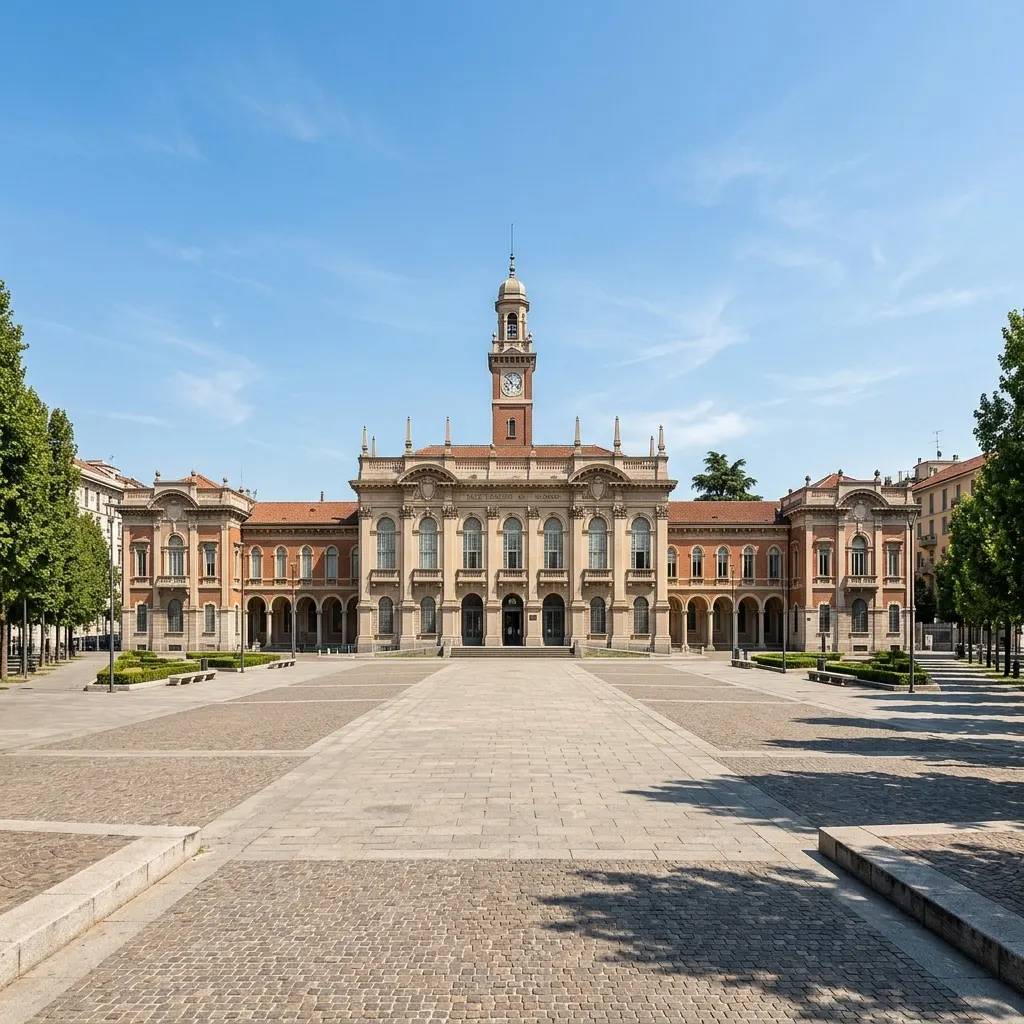
With the state-supported scholarship options it offers international students, Italy is an increasingly appealing destination for Turkish students. This guide explains all of Italy’s government scholarships in one place, along with which scholarship suits whom.
Which government scholarships are there in Italy?
The main state-supported scholarship channels for Turkish students in Italy are: the MAECI government scholarship given by the Italian Foreign Ministry, the income-based DSU grants given by the regions, the universities’ own merit scholarships, the Erasmus+ exchange programme, and the Invest Your Talent programme offering an internship in certain fields. Each channel addresses a different student profile; some focus on merit, some on income, some on certain fields. This variety offers different opportunities to students in different situations.
The MAECI government scholarship
The MAECI scholarship is the merit-based scholarship the Italian state gives at master’s, doctoral, AFAM and language-course level. It covers a monthly living allowance, a fee exemption and health insurance. It is not given at bachelor’s level. The application is made through the Study in Italy portal, and the academic file and motivation letter stand out in the assessment. Turkey is among MAECI’s target countries; so it is a stable option for Turkish students.
The regional DSU grants
The DSU grants are the income-based supports given by each region’s student-right agency. They are valid at every level, including the bachelor’s, and offer in-kind support such as a hall and canteen alongside the cash grant. Students from Turkey usually qualify for the highest grant amount. The application needs the ISEE Parificato document showing your family’s income. For low-income students, the DSU is the most comprehensive door onto studying in Italy.
University and other scholarships
The universities’ own merit scholarships rest on academic achievement, independent of income; they can take the form of a fee exemption and a cash allowance. Erasmus+ gives the chance to study a term in Italy from your own university. Invest Your Talent offers an English-taught master’s with an internship in fields such as engineering, design, economics and computing. These extra channels, considered together with the main scholarships, widen your total opportunity.
Which scholarship suits you?
Finding the right scholarship depends on a few questions: What level will you study at? Is your family’s income below the threshold? Is your field covered by a special programme? For a bachelor’s the DSU and university scholarships; for a master’s MAECI, the DSU, university and IYT; for a doctorate funded posts stand out. For most students, the smartest strategy is to consider in parallel, in the same year, the several channels you are eligible for.
Document preparation
Whichever scholarship you apply to, document preparation is a common and critical step. The diploma and transcript apostille and sworn translation, income documents and the ISEE Parificato for the DSU, and degree recognition (CIMEA/DoV) for a master’s/doctorate are needed. As these documents take time, you must start preparing well before the application period. For the document processes, see our guide library.
When should you start?
To study on a scholarship in Italy, ideally you should start preparing about a year before the academic year you plan to study. This time is needed to determine the target programmes, meet the language condition, prepare the documents and make the applications on time. Acting early gives both access to more options and the chance to manage the whole process stress-free.
How much do scholarships lower the cost of study in Italy?
Italy is a country that tiers public-university fees by income and keeps a strong student-right system. So combined with scholarships, the cost of education becomes quite sustainable for Turkish students. When the DSU grant covers the hall and canteen, MAECI the living allowance, and the fee exemption the tuition fee, usually only personal spending remains. Choosing an economical city eases this picture further. That is, a scholarship in Italy is not a “prize” on its own but a lever that changes the whole cost structure.
A pre-application checklist
Before applying to any Italy scholarship, clarify these steps: your target level (bachelor’s, master’s, doctorate), your family’s income situation (for DSU eligibility), whether your field falls under a special programme, the required language level and the state of your documents. These five headings set the channels open to you and each one’s calendar. The student who draws up the checklist early both accesses more options and runs the document processes calmly. For a detailed decision, see our which scholarship fits you page.
Verifying from official sources
Scholarship amounts, application dates and quotas can change with every academic year; so always verify the information in this guide from the official source. For MAECI the Study in Italy portal, for the DSU the student-right agency of the region you will study in, and for a doctorate the universities’ bando pages are the primary sources. Trust these official channels, not intermediaries’ “guarantee” promises. Current and accurate information is the foundation of a successful application.
Frequently asked questions
Is there an Italy government scholarship for a bachelor’s?
MAECI is not given at bachelor’s level; for a bachelor’s the income-based DSU grants and the universities’ merit scholarships are the priority.
Can I apply to several scholarships at once?
Yes; the different channels (MAECI, DSU, university) are usually applied for separately and, if the conditions align, can be taken together.
Is knowing Italian a must?
Italian-taught programmes usually want B2; for English-taught programmes an English certificate may be enough.
For the sworn translation of your documents in your Italy applications, you can take a free quote; for the processes, see our guide library, and for the scholarship channels, our scholarships section.